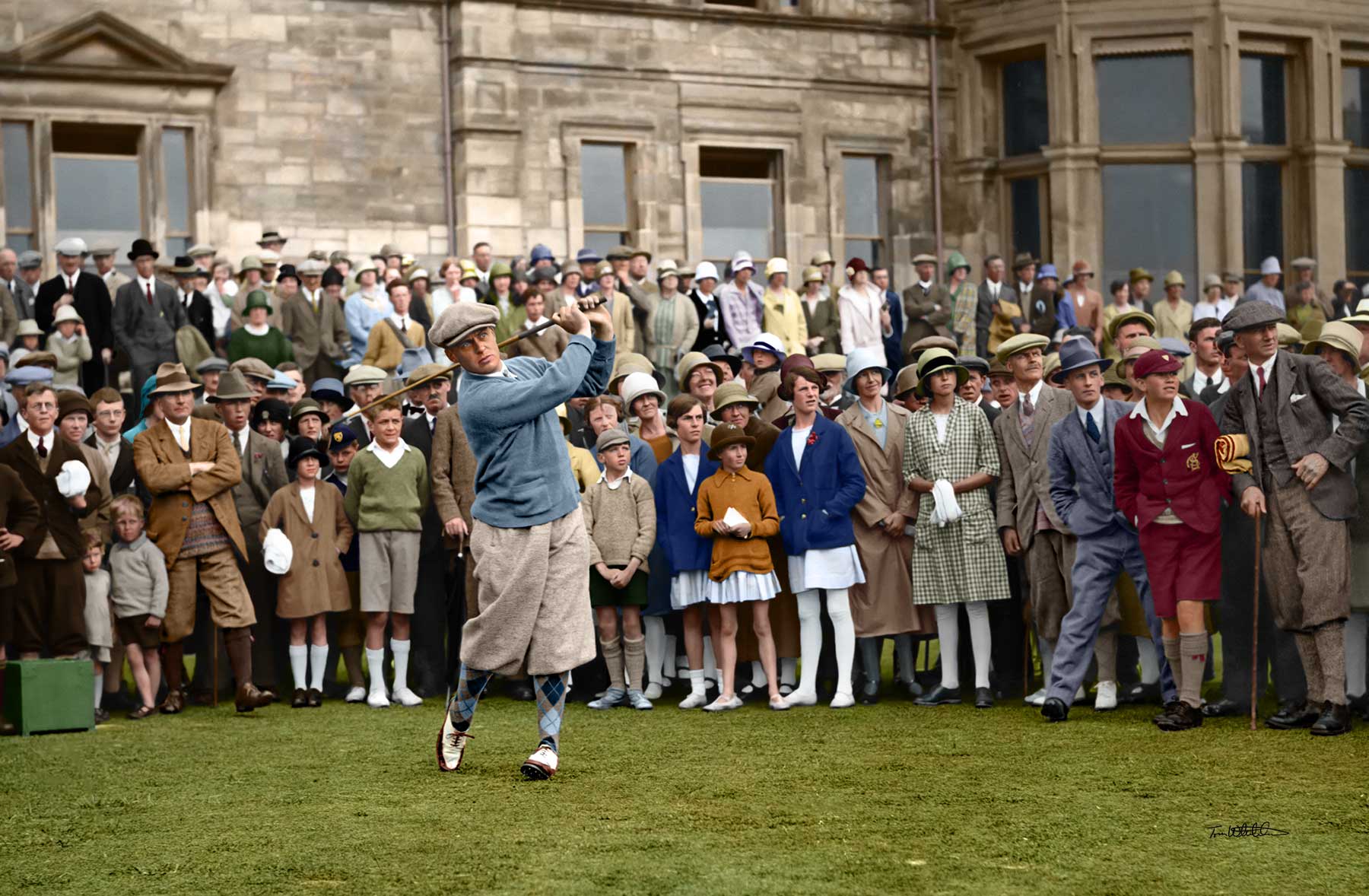




He held degrees from Georgia Tech, Harvard, and Emory. He studied German, French, and Latin. He read the classics and solved math problems while traveling to pass the time. Not a single ghostwriter helped him write over one and a half million words in hundreds of newspaper columns from 1927 to 1935. He wrote four books and occasional articles for the American Golfer magazine.
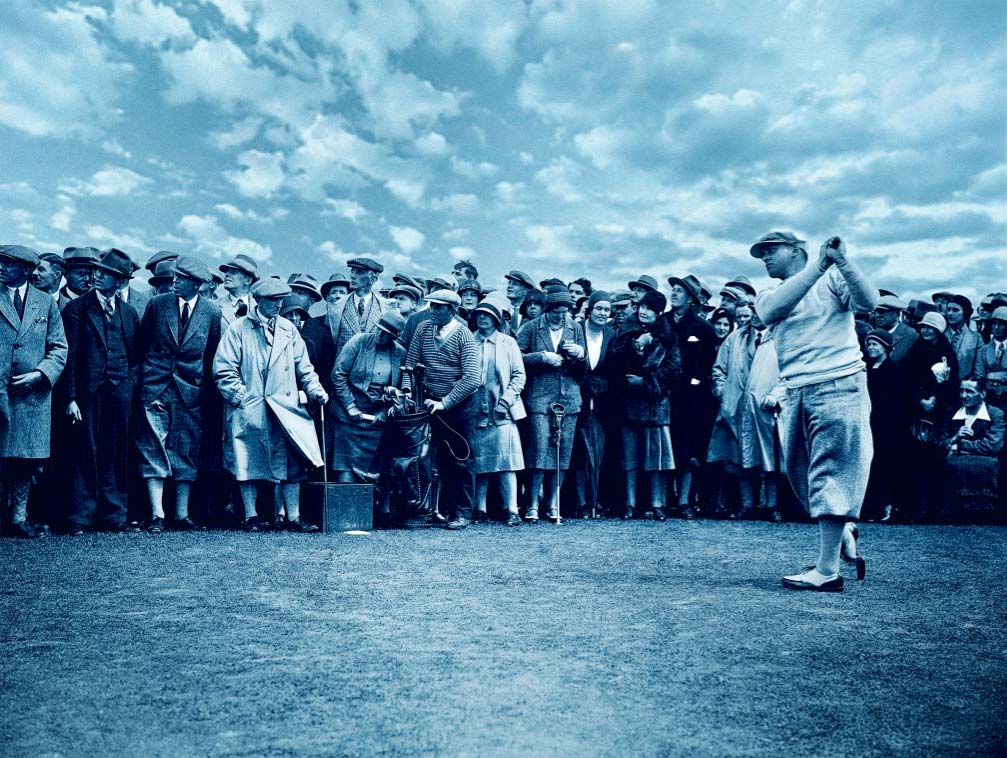
In golf, the most important distance is the five inches between the ears.
No putt, or detail, is too small to be despised.
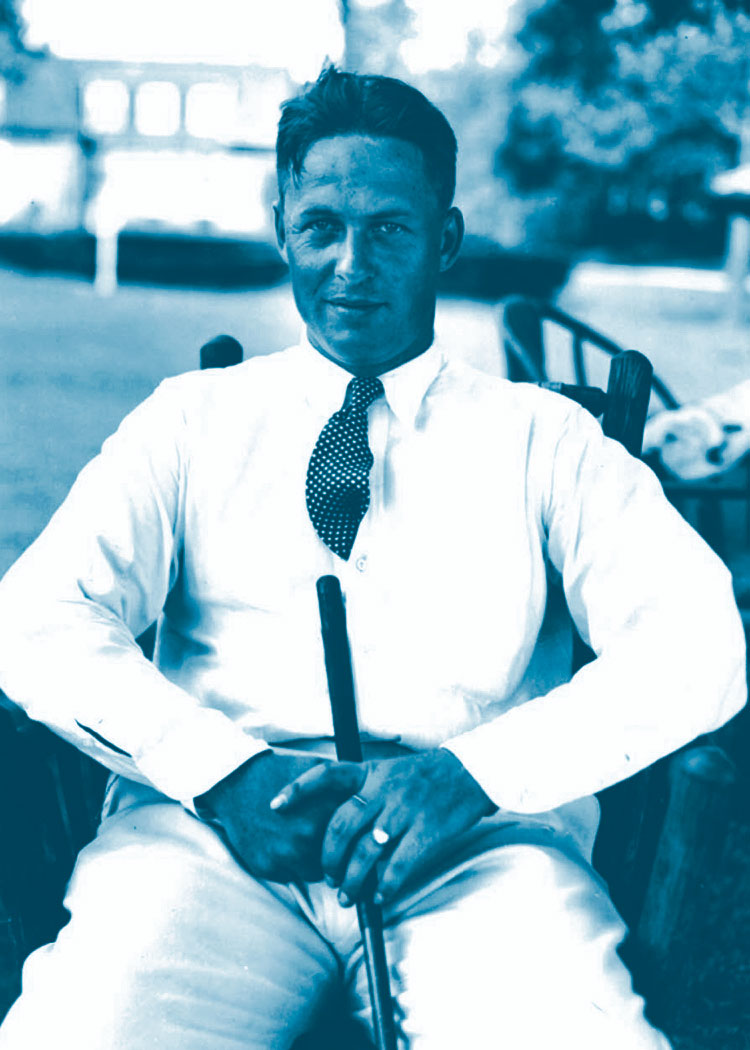
The secret to golf, and business, is to turn three shots into two.
I never learned anything from a match I won.
Friends are a man’s priceless treasures, and a life rich in friendship is full indeed.
On calling penalty strokes on himself: You may just as well praise me for not breaking into banks. There is only one way to play this game.
You swing your best when you have the fewest things to think about.
Golf is the closest game to the game we call life. You get bad breaks from good shots; you get good breaks from bad shots – but you have to play the ball as it lies.
The object of golf is to beat someone. Make sure that someone is not yourself.
The difference between a sand trap and a water hazard is the difference between a car crash and an airplane crash. You have a chance of recovering from a car crash.
Too much ambition is a bad thing to have in a bunker.
It is nothing new or original to say that golf is played one stroke at a time. But it took me many years to realize it.
My best scores have always been when I have run into a streak in the midst of a round – late enough to permit me to get back to the clubhouse before I entirely regained consciousness.
On the golf course, a man may be a dogged victim of inexorable fate, be struck down by an appalling stroke or tragedy, become the hero of an unbelievable melodrama, or the clown in a side-splitting comedy – any of these within a few hours, and all without having to bury a corpse or repair a tangled personality.